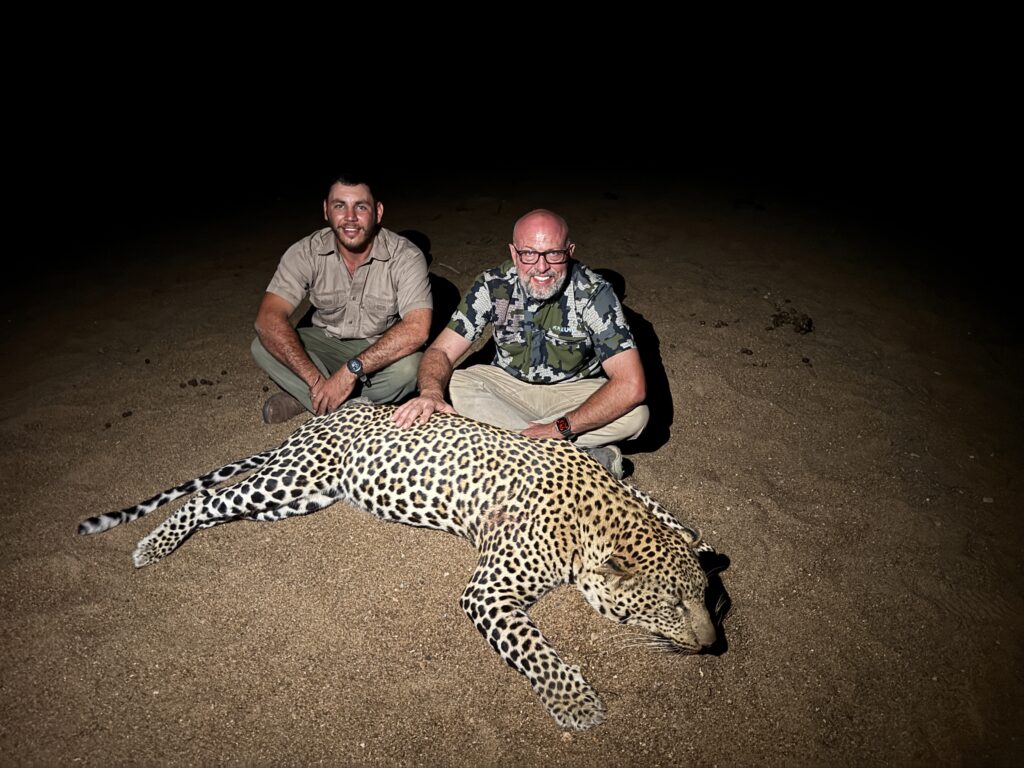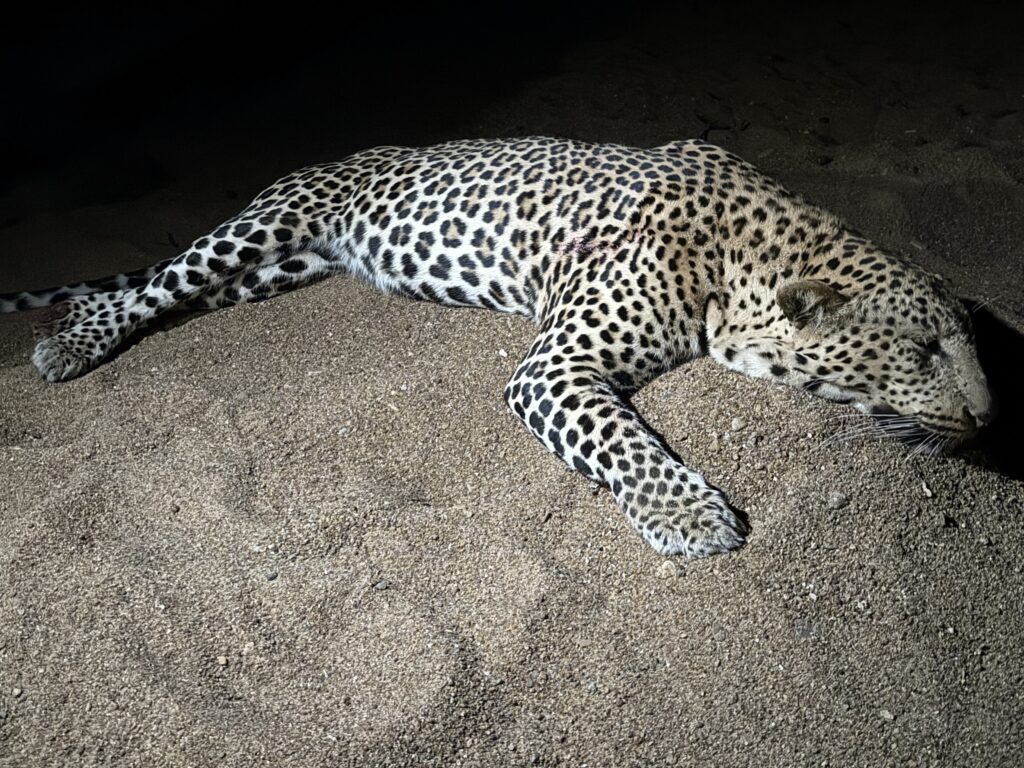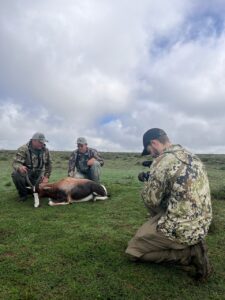
Leopard hunting in Zimbabwe is widely considered one of the most challenging and rewarding hunts in the world. Combining patience, precision, and ethical wildlife management, it is a pursuit that separates experienced hunters from everyone else.
At Dallas Safari Club 2026, we sat down with veteran hunter Josh Kirkland as well as PH Richie Shultz to discuss his recent leopard safari and what truly makes this hunt so demanding—and so rewarding.
Why Leopard Hunting Is So Demanding
The Daily Routine Behind Success
Unlike other African hunts, leopard hunting requires a relentless daily routine. Success depends on discipline and consistency, often over many days or even weeks.
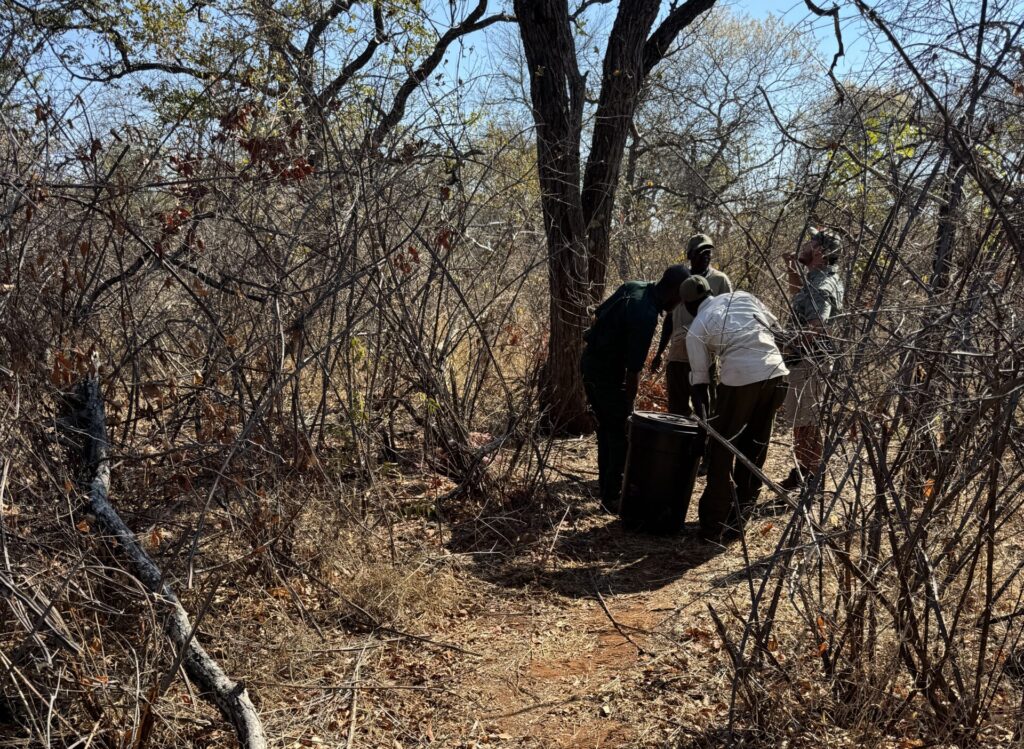
- Early morning bait checks
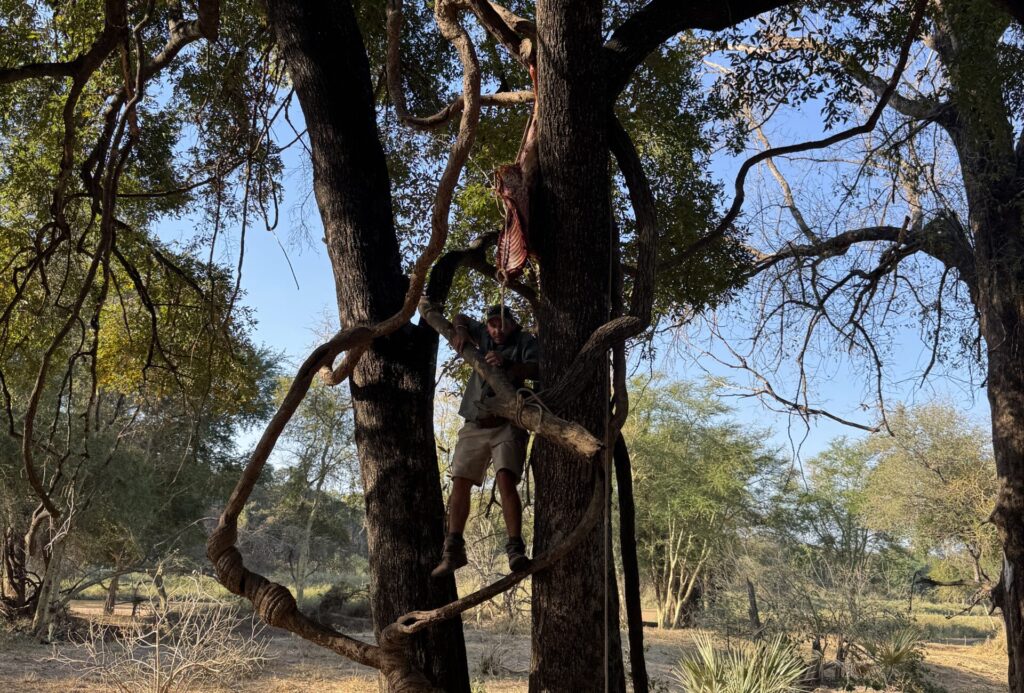
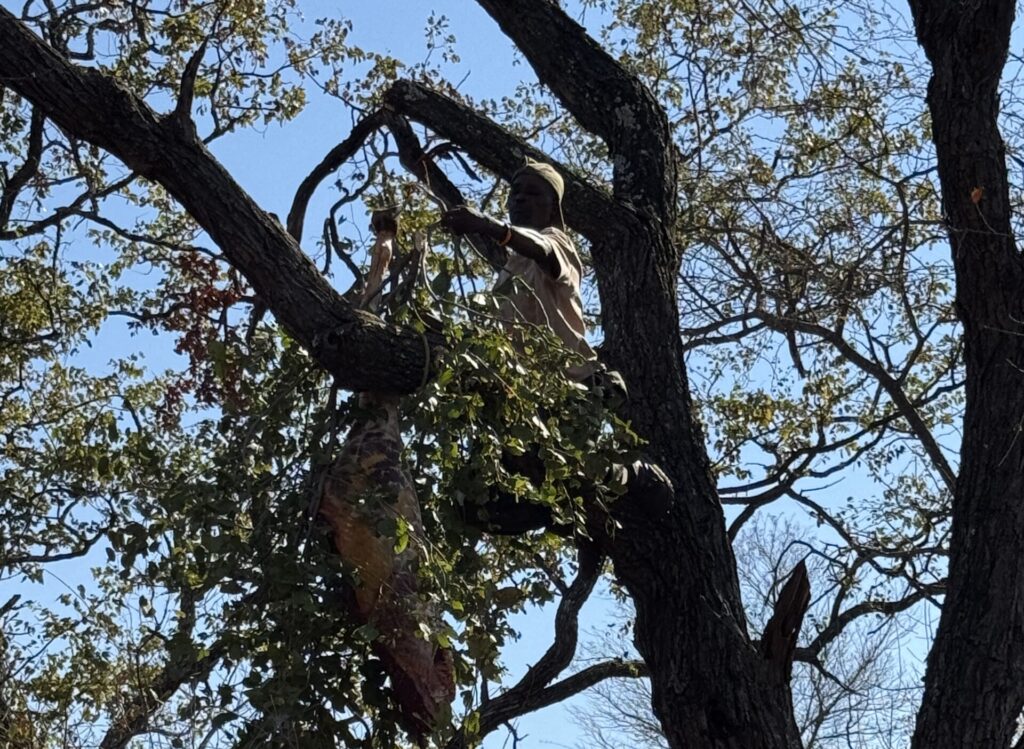
- Refreshing and rehanging baits
- Reviewing trail camera photos
- Adjusting blinds for wind and visibility
- Evening sits until dark
Precision Matters at Every Bait
Every bait must be placed with absolute precision. Height, tree selection, shooting angle, and approach path all matter. A leopard that feels uncomfortable simply won’t commit.
ZIMBABWE NUNETSI LEOPARD HUNT >
Ethical Leopard Hunting and Conservation Practices
Identifying the Right Cat
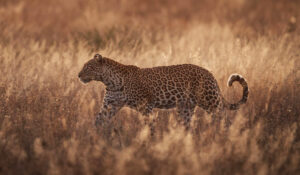
Each leopard is identified by unique spot patterns—often described as fingerprints—commonly located behind the shoulder. Trail camera data is collected over months or years.
Age and Maturity Standards
Before a leopard is approved for harvest, photos are reviewed to confirm age, size, and maturity. Most ethical operations only harvest toms five years and older.
This conservation-first approach results in healthier populations, stronger genetics, and sustainable hunting opportunities.
When the Leopard Hits the Bait
The Most Intense Moment in the Hunt
Seeing a leopard in the tree above the bait is one of the most adrenaline-filled moments in hunting. Even experienced hunters feel it immediately.
Verification Before the Shot
Professional hunters carefully confirm identity, markings, and age before allowing the shot. Assumptions have no place in leopard hunting.
In the best-case scenario, the cat expires in the tree—eliminating the most dangerous part of the hunt: tracking a wounded leopard.
Why Zimbabwe Produces World-Class Leopard Trophies
Large, Well-Managed Concessions
Zimbabwe’s private concessions often span hundreds of thousands of acres, allowing leopards to reach full maturity under strict quota systems.
Results of Ethical Management
- Larger mature toms
- Consistent annual success
- Long-term population stability
Is Leopard Hunting in Zimbabwe Right for You?
A Mental Chess Match
Leopard hunting is not about speed or volume—it’s about patience, discipline, and mental toughness.
A Defining Experience
For many seasoned hunters, leopard represents the ultimate African trophy. Not because it is easy, but because it demands everything you have.
When planned correctly and done ethically, a Zimbabwe leopard hunt becomes more than a safari—it becomes a defining moment in a hunter’s lifetime.